May 11, 2026 - Daniel Burgdoff
When we look at a modern photograph, a movie scene, or a 3D video game design, we take depth for granted. We accept that objects get smaller as they recede into the distance and that light wraps around a curved surface to create shadows. But for centuries of human history, art didn't work that way. If you look at European paintings from the Middle Ages, they feel flat, symbolic, and intentionally disconnected from the physical world. Figures were sized based on their religious importance, not their distance from the viewer.
Then came the fifteenth century in Italy, and with it, a profound cultural recalibration known as the Renaissance. This era didn't just change the subject matter of art; it fundamentally altered the mechanics of how humans observe reality. By merging artistic intuition with rigorous mathematical and scientific inquiry, Renaissance masters transformed the flat canvas into a window of infinite depth.
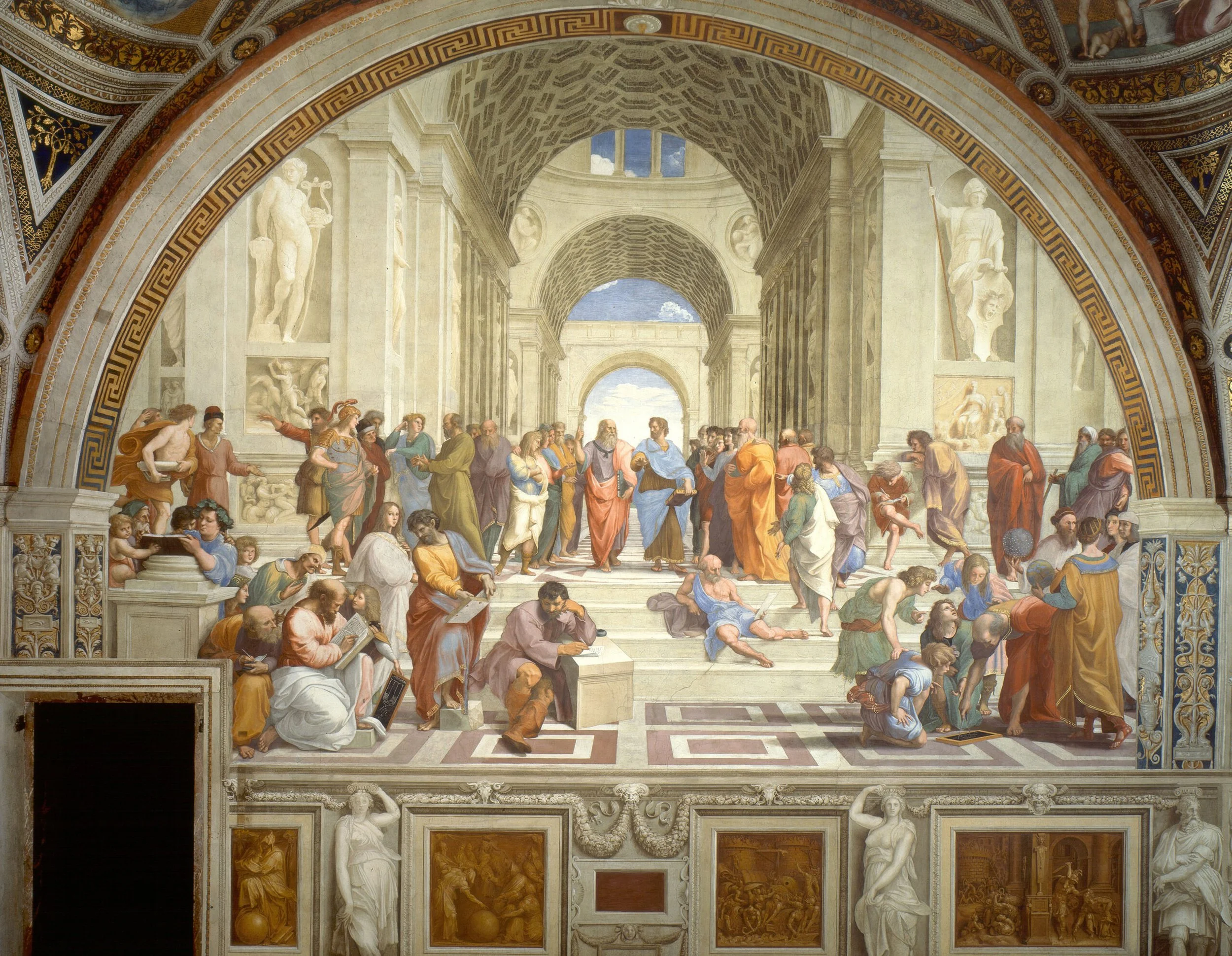
The breakthrough that arguably defined the entire era wasn't a new type of paint or a radical philosophy, but a geometric formula. Around 1415, the architect Filippo Brunelleschi demonstrated a system of linear perspective that allowed artists to accurately replicate three-dimensional space on a two-dimensional surface. By establishing a single "vanishing point" on a horizon line and drawing converging lines toward it, artists could mathematically calculate the exact rate at which objects should shrink as they move away from the eye. When painter Masaccio applied this to his fresco The Holy Trinity, viewers were allegedly terrified by the illusion, believing a real, structural chapel had been carved into the church wall. This wasn't just decoration; it was spatial engineering.
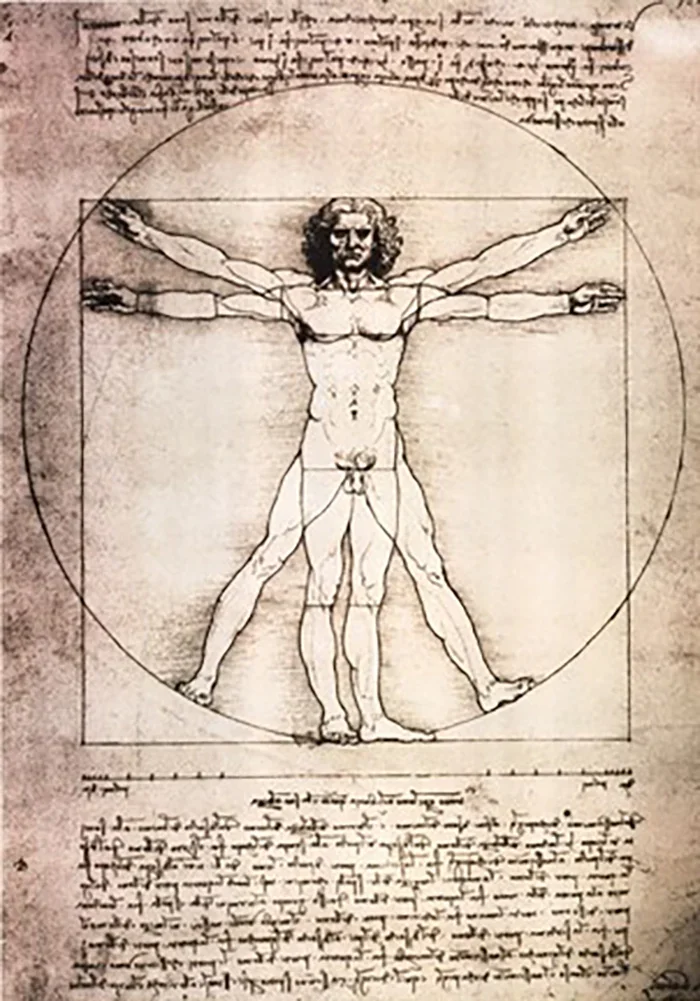
To make these perfectly calculated spaces feel alive, Renaissance artists turned their attention to the human form. The idealized, static figures of antiquity were no longer enough. Masters like Leonardo da Vinci and Michelangelo Buonarroti began conducting clandestine human dissections, working alongside physicians to map the inner workings of the body. They studied the attachment points of tendons, the mechanics of joint articulation, and the way muscles contract under strain. Leonardo da Vinci famously noted that it was necessary for a painter to be an anatomist so they could know how to balance the muscles and understand which muscle caused a specific movement.
This scientific rigor manifested heavily in works like Michelangelo’s David. The sculpture captures the tense, preparatory moment before battle, with the veins in the right hand visibly swollen and the weight shifted in an anatomically precise posture known as contrapposto. The stone ceased to feel like rock; it mimicked the fluid tension of living tissue.
As the era progressed, the understanding of physics and optics caught up with geometry. Early Renaissance work, while spatially accurate, often retained sharp, rigid outlines. Leonardo da Vinci recognized that the human eye does not see the world in crisp borders because air has density and light scatters. To solve this, he pioneered sfumato, a technique derived from the Italian word for smoke. By applying dozens of incredibly thin, translucent layers of oil glaze, he blended transitions between light and shadow so subtly that the edges disappeared. This optical realism allowed the subjects to merge seamlessly with the atmosphere around them, giving paintings like the Mona Lisa an ambiguous, lifelike presence that hard lines could never achieve.
The Italian Renaissance is often romanticized as a period of pure poetic inspiration, but its true significance lies in its systematic approach. The artists of this era operated much like modern industrial designers or architects; they treated the canvas as a laboratory where light, geometry, and anatomy could be tested and mastered. By forcing art to coincide with the laws of the physical universe, they created a visual language that continues to dictate how we construct and consume imagery today.